 Bullard Industrial Technologies, Inc.
Est. 1981
Steam Turbines – The Original Variable Speed Drive
Background
The Affinity Laws are the result of a proven theorem that applies to centrifugal machines such as pumps, fans, blowers, compressors and chillers. The Affinity Laws state that reducing the motor speed by
25% reduces energy consumption by nearly 60% while reducing the motor speed by 50% reduces energy consumption by nearly 90%.
In today’s world the most common method of increasing the efficiency of a rotating piece of equipment such as a pump, fan, compressor or blower is to use an electronic variable speed drive (VSD) to control the speed of the induction electric motor driving the piece of equipment just fast enough to meet the demand on the system. Electronic variable speed drives control the speed of the motor by changing the frequency (Hertz) of the supply power. Because of the way they function, they are sometimes called variable frequency drives (VFD). The result and only advantage of the VSD is a partial savings in electrical costs to run the motor.
However, variable frequency drives are not the only means of varying the speed of a centrifugal machine in order to reduce or totally displace the power consumption of an electric motor. Steam turbine drives can run at a constant speed or any percentage of variable speed. A steam turbine replaces the electric motor as the prime mover of the centrifugal machine and requires little or no electrical power to operate. When there is sufficient low pressure steam load/demand in a facility, steam turbine drives are a viable alternative to variable frequency-controlled induction electric motors to drive centrifugal rotating equipment
Steam turbines accomplish variable speed operation by utilizing hydraulic or oil relay governors that modulate the supply of steam to the turbine to achieve variable speed operation over a broad operating range. Due to their centrifugal design steam turbines will not fail when overloaded allowing them to be routinely overloaded to satisfy peak demands. Variable speed drives cannot handle such overload requirements as the motor would draw excessive currents from the VSD causing it to trip on an overcurrent fault.
Low pressure steam required for building heat, process work, feedwater deaeration, food preparation, absorption chillers, etc. that is supplied from a pressure reducing valve results in 100% of the steam lost to the low pressure system. Utilizing a backpressure steam turbine to drive a rotating machine and then using the exhaust steam for the low pressure system results in re-use of the heat in the steam for the low pressure needs and eliminates the cost of running an electric motor.
Comparison
Advantages of Steam Turbine Drives:
• Impervious to climactic conditions and virtually any severe operating conditions. Can be installed inside a building or outside in any adverse weather atmosphere. They are not affected by high or low ambient temperatures, high humidity (even rain) or even snow and icy conditions.
• Can operate as non-sparking for use in explosive atmospheric conditions.
• High starting torqued without slowing down or tripping.
• Tolerable of frequent and lengthy overloading without tripping.
• Less overall maintenance compared to a VSD driven motor.
• Will remain in operation during loss of power or power interruptions.
• As a prime mover can operate at high speeds to drive a centrifugal machine without the need for a gearbox.
• Can be used for electrical demand peak shaving, hot standby and emergency service.
Disadvantages of Steam Turbine Drives:
• Requires the availability of steam.
Advantages of Variable Speed Drives:
• Reduction in the overall power required by the motor by operating at less than 100% speed.
• Some reduction in peak electrical demand via programming gradual or soft start of the motor
Advantages of Variable Speed Drives:
• Requires availability of three phase power supplied to the VSD to run the motor.
• Maximum operating temperature is @100 degrees, F.
• Higher ambient temperatures require cool, filtered air via cooling fans, air conditioning units or liquid cooling systems to maintain the temperature of the drive.
• The drive must be in a relatively clean, dry environment. Otherwise, frequent cleaning is required.
• For high starting torque applications, the VSD must have a special Torque Boosting capability feature to satisfy high inertial loads.
• The electric motor must be replaced with a specially designed Inverter Duty rated motor that is specially wound to tolerate the significant heat buildup in the motor windings from the VSD controlling the power frequency (Hertz) needed to control the motor’s speed.
• VSDs require a “clean”, constant power supply. They cannot tolerate voltage spikes or sags without
incurring significant damage to the electronic controls.

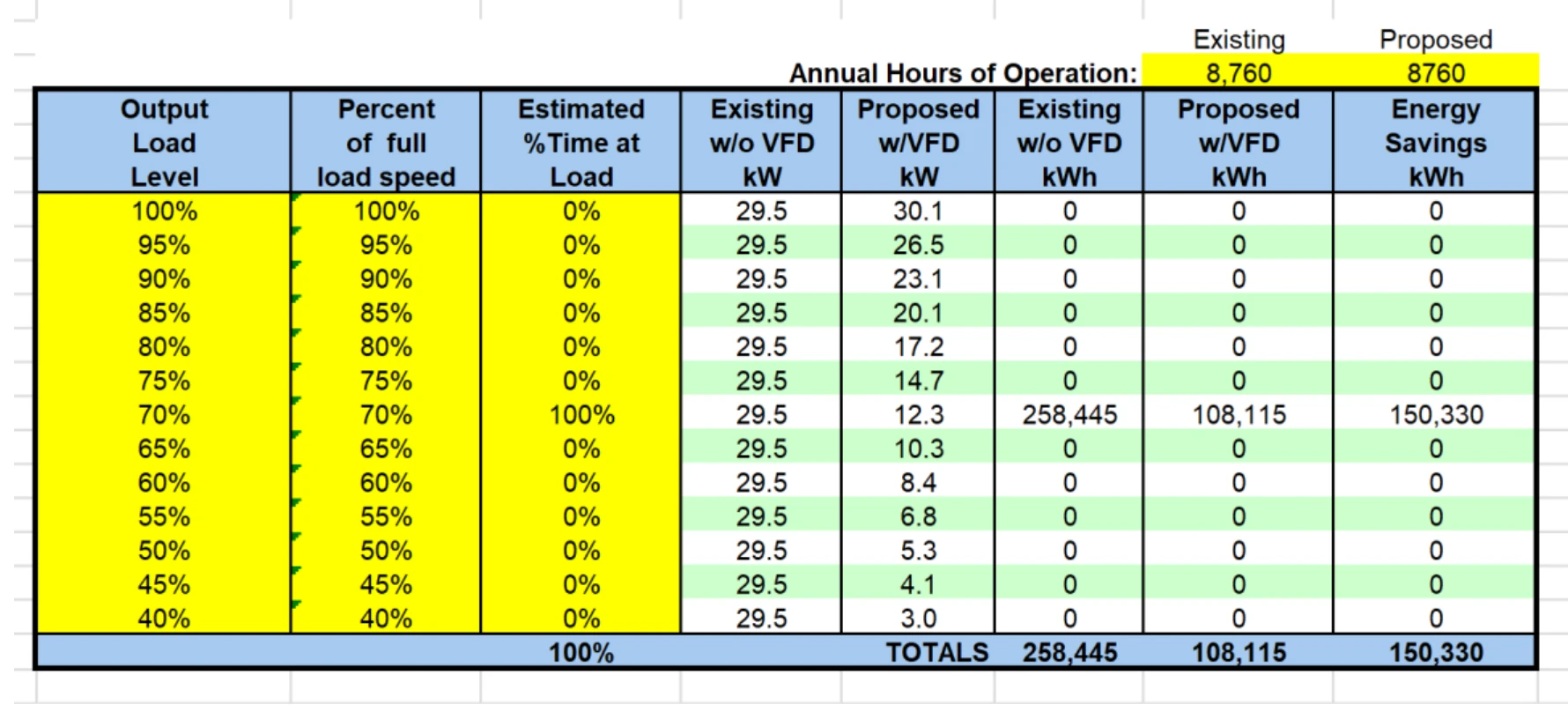
The data in the table above is from a generic variable frequency drive program using a 50 hp motor driving a boiler feedwater pump for 1 year. The average load on the motor is 70% for the year. Using the drive to control the motor the annual KWH is 108,115. Considering $.06 per KWH the annual cost of running the motor with the drive is $6,486. The annual savings of replacing a motor drive with a variable frequency drive and an inverter duty rated motor to drive the pump is $9,020.
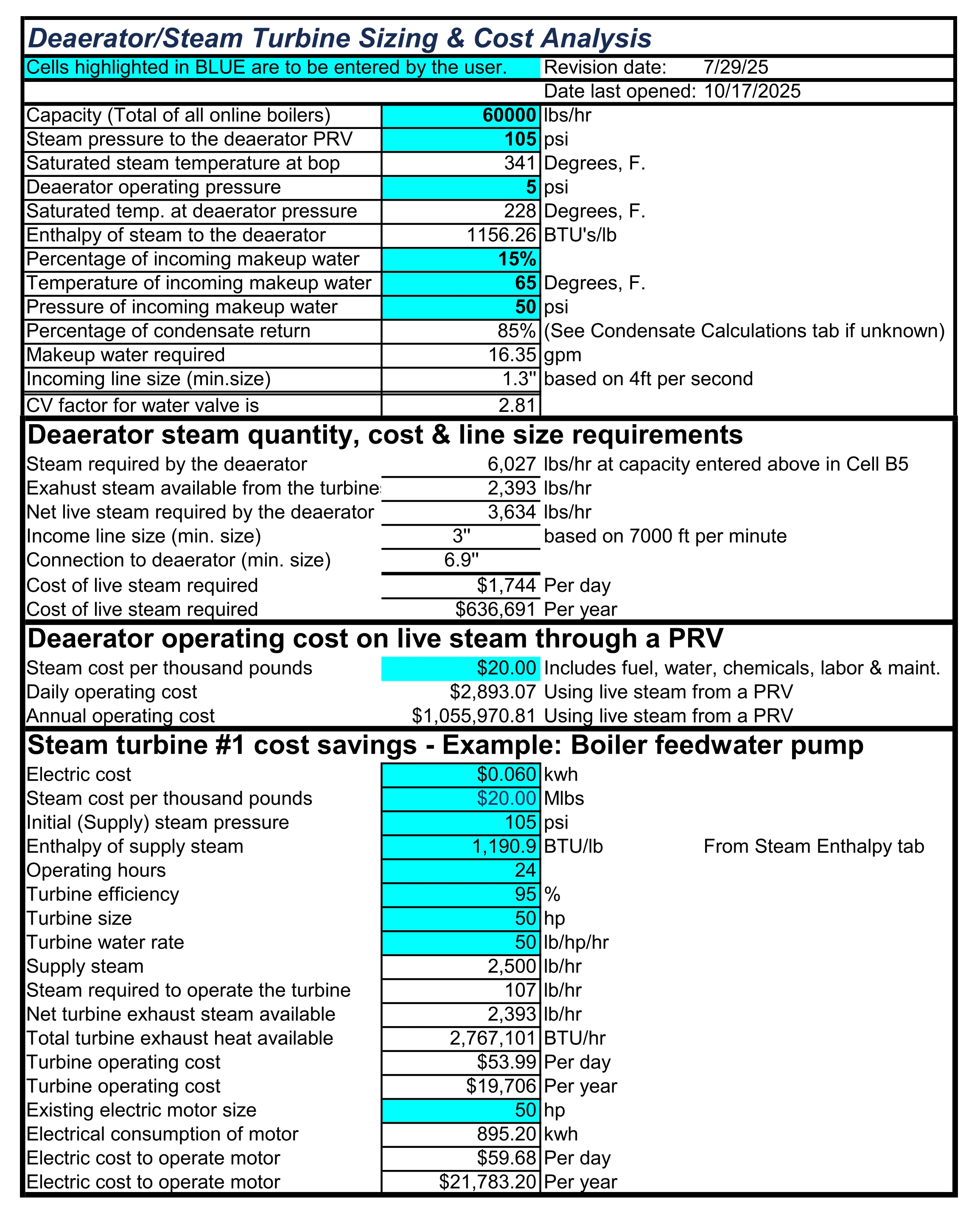
The table below shows the cost savings associated with using a 50 hp steam turbine to drive the same boiler feedwater pump at an average load of 70% for an entire year. (At full load the turbine can exhaust 2,393 lbs/hr). The steam turbine is exhausting into a deaerating feedwater heater requiring 6,027 lbs/hr of steam. In this scenario the turbine can provide 1,643 lbs/hr of exhaust steam thus reducing the live steam need to 3,634 lbs/hr. At $20.00 per thousand pounds of steam, this reduces the annual operating cost of using live steam from $1,055,971 to $636,691 for an annual live steam saving of $419,280 using exhaust steam from the turbine.
With an annual operating cost of $19,706 for the turbine drive and $21,783 for the motor drive the net annual savings using the steam turbine is $2,077.
Return on Investment
The cost of replacing the 50 hp induction motor drive with a variable frequency drive and inverter duty rated motor is about $20,000 including labor and materials. With an annual electric savings of $9,020, the ROI would be at 2.2 years.
The approximate cost of replacing the induction motor drive with a variable speed governed impulse steam turbine is as follows:
50 hp steam turbine and base: @$45,000. Labor and materials to install steam supply to the turbine and exhaust piping to the deaerator or any low pressure steam load that can handle some or all of the exhaust steam would be @$65,000 for a total installed cost of @$110,000. With a net annual steam savings of @$419,280 using steam turbine exhaust and an installed cost of $110,000 for a steam turbine
drive, the ROI for the steam turbine conversion would be 3.81 years.
Conclusion
If steam is not available then conversion to a VSD would be the viable option. If steam is available, even though the daily operating cost of a turbine drive VS a motor drive will result in a far greater savings at $419,280 per year compared with a VSD conversion annual savings of $9,020.
Steam costs lower than the example and/or electric costs higher than the example result in a greater savings and faster return-on-investment (ROI) when utilizing steam turbine drives. Larger horsepower applications also result greater savings at a comparable ratio to the 50 hp example.
The key to this cost savings feasibility is to have sufficient low pressure stem demand to accept 100% of exhaust steam available from the steam turbine drive or as close to 100% as possible. Low pressure
steam loads to consider are: deaerating feedwater heater, fuel oil heating systems, building heating systems, large domestic water heaters supplied by steam, absorption chillers, etc. Common applications for steam turbines are boiler feedwater, cooling water and condensing water pumps in addition to fans, blowers and compressors.
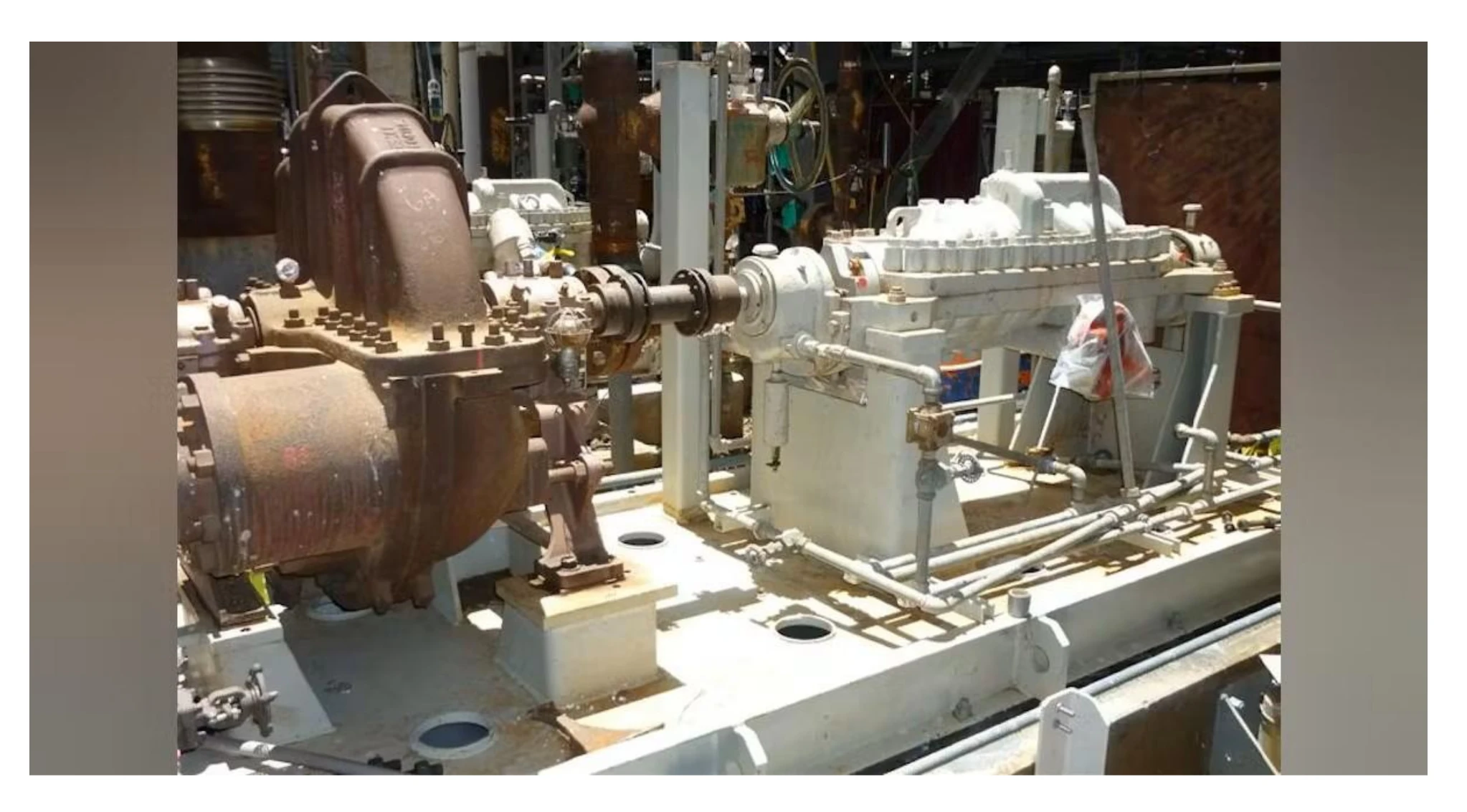
Steam turbine-driven boiler feedwater pump conversion.
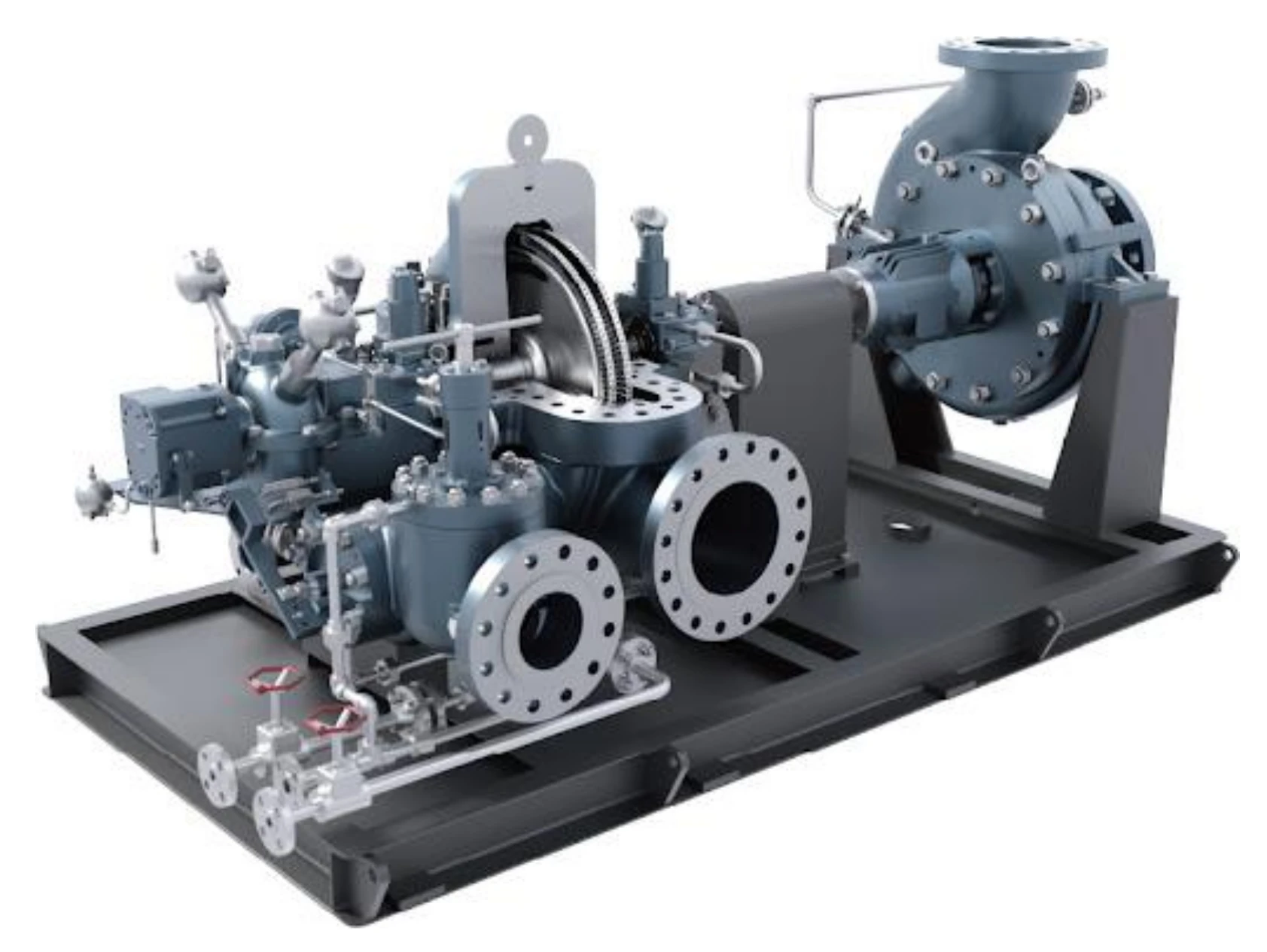
Steam turbine-driven end-suction centrifugal pump
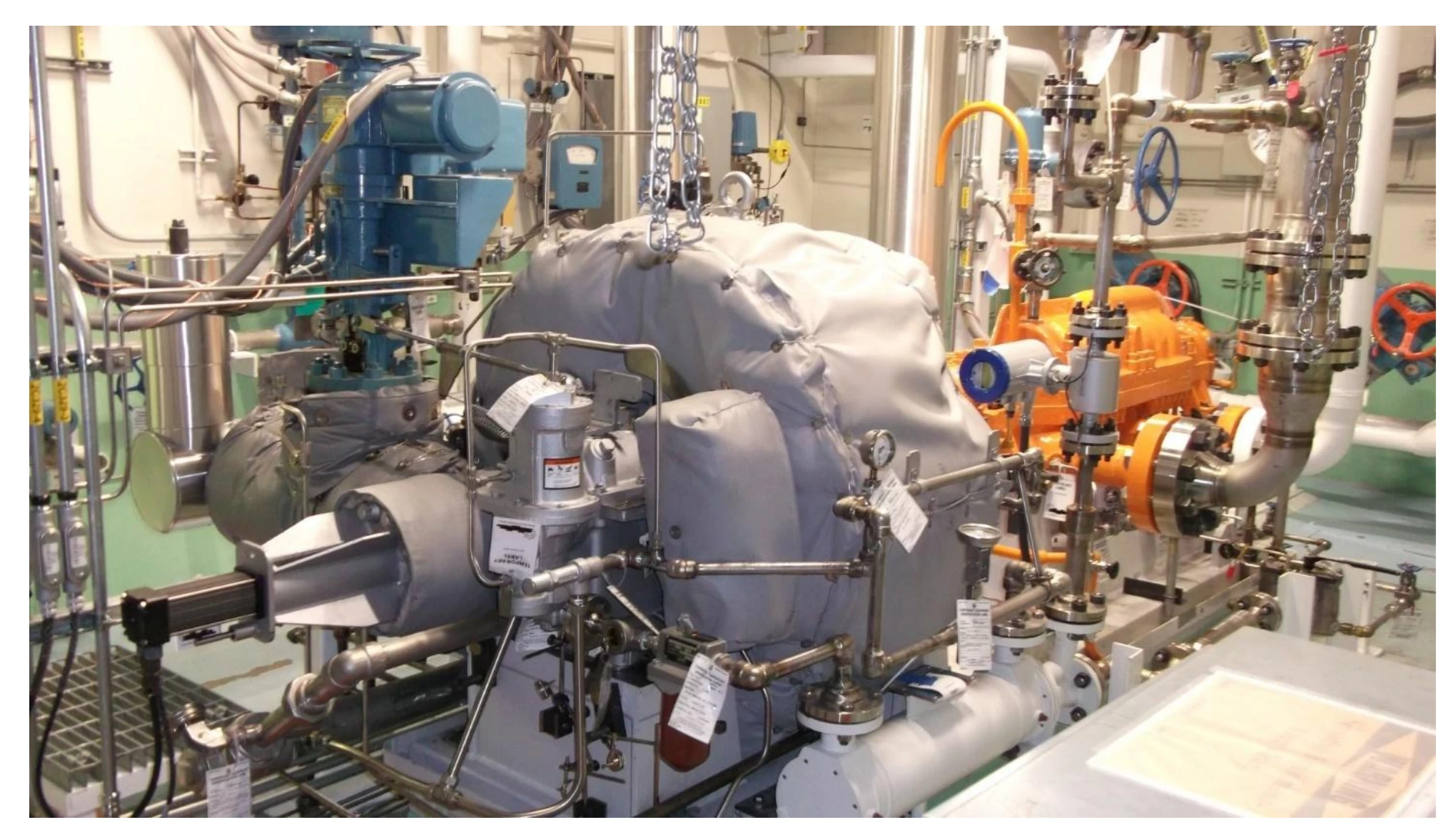
Steam turbine-driven high pressure boiler feedwater pump.
Bullard Industrial Technologies, Inc.
E-mail: bullardindustrialtech@protonmail.com